
Preparing Your Furnace for Winter
The first truly cold morning is a tough time to discover your furnace isn’t ready for the season. You turn up the thermostat, wait for warm air, and realize something isn’t right.
A little preparation before winter can help you avoid that scramble. It also gives you time to ask questions, address concerns, and understand how your heating system is performing before you depend on it every day.
Some steps are simple homeowner tasks. Others belong with a trained HVAC technician. Here’s how to get started and head into colder weather with a clearer plan.
Schedule Professional Maintenance
If your furnace hasn’t been checked recently, put maintenance on your calendar.
A professional visit provides an opportunity to inspect the system, evaluate operation, and identify concerns that may not be obvious from the outside. For fuel-burning equipment, the Consumer Product Safety Commission recommends a yearly professional inspection, including associated chimneys, flues, and vents.
Ask what your appointment includes and share anything unusual you’ve noticed. A new sound, uneven heating, or repeated shutdowns can help guide the technician’s assessment.
Maintenance cannot guarantee a trouble-free winter, but it gives you useful information before small concerns become urgent repair calls.
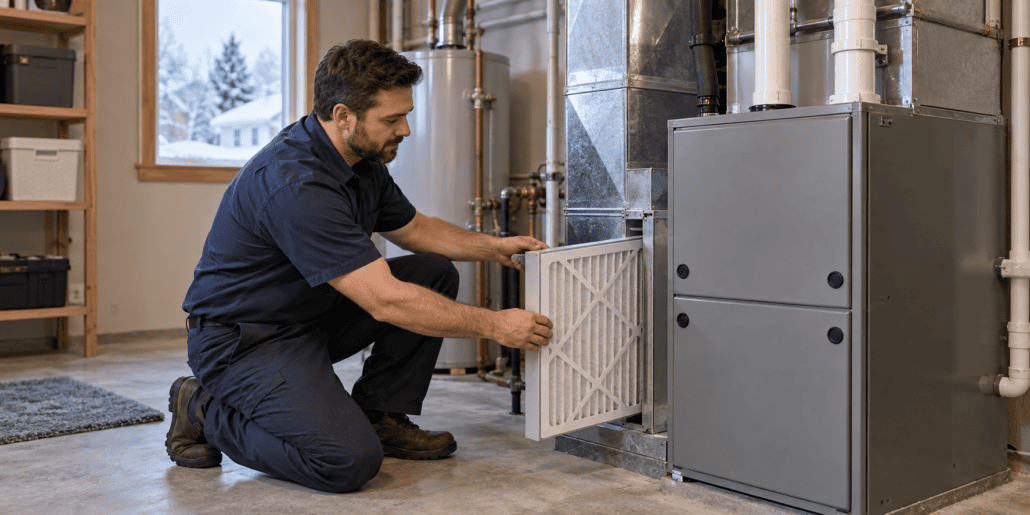
Check the Air Filter
Your filter is an easy item to forget until it becomes visibly dirty.
A clogged filter can restrict airflow, making it harder for your system to move air through your home. The Department of Energy recommends checking filters monthly, although replacement needs depend on the filter, equipment, and household conditions.
Follow your furnace manufacturer’s instructions when checking or changing it, including switching the equipment off as directed.
Use the correct size and an appropriate filter type. A more restrictive filter isn’t automatically better for your particular system.
If you aren’t sure what to buy or how often to replace it, ask your HVAC technician for guidance.
Give Air a Clear Path
Take a walk through your home and look at supply registers and return grilles.
Furniture, rugs, curtains, and storage boxes can end up covering them without anyone noticing. Rearranging a room during summer may create an airflow issue that only becomes apparent when heating season begins.
Keep these areas unobstructed and clean accessible grilles according to the manufacturer’s guidance.
If one room remains uncomfortable, mention it during your service appointment rather than assuming you simply need to turn the thermostat higher.
Uneven temperatures can have several causes, and identifying the cause is more useful than repeatedly adjusting the setting.
Test Your Thermostat Before You Need It
Choose a mild day to check that your thermostat is set to heating mode and that the furnace responds normally.
Review programmed schedules, especially if your household routine has changed. Replace batteries if your thermostat uses them and they are due for replacement.
Give the equipment time to respond according to its normal operating sequence. Repeatedly changing settings won’t help you understand a problem.
If the system doesn’t start, cycles unusually, or fails to provide heat, arrange service.
Note what happened and any displayed error message so you can give the technician a useful description.
Keep the Furnace Area Accessible
The space around your furnace should remain available for service and safe operation.
Move storage items away and follow the equipment’s required clearances. Keep combustible materials, cleaning chemicals, and other unsuitable belongings out of the immediate area.
Avoid covering openings or changing how the equipment receives air. A furnace room isn’t a good place to improvise storage solutions.
If you’re planning to finish a basement or enclose the equipment, discuss the layout with an HVAC professional first.
Your technician can explain access and ventilation needs for your system before construction makes those requirements harder to accommodate.
Check Vents and Carbon Monoxide Alarms
Fuel-burning heating equipment requires particular attention to ventilation and carbon monoxide protection.
From a safe ground-level position, look for visible obstructions around accessible outdoor intake and exhaust openings. During winter, keep those openings clear of snow without damaging the venting.
Test carbon monoxide alarms according to their instructions and check replacement dates. If an alarm sounds, move everyone outside and call 911. If you smell gas, leave without operating switches or using a phone indoors, then contact emergency services or your gas utility from outside.
Never attempt repairs to gas lines or combustion components yourself.
Make a Plan for a Comfortable Winter
Before the season gets busy, gather your furnace information, service records, and any questions you want to ask. Keep TOBIN HVAC’s contact details handy, too.
You don’t need to become a heating expert to prepare your home. A few consistent habits and professional guidance can help you make informed decisions.
Contact TOBIN HVAC to schedule furnace maintenance and discuss what your system needs before winter settles in.
TOBIN HVAC is one of the Most Trusted Names in Commercial HVAC in the greater Denver area for over 70 years. At TOBIN HVAC, we believe that true comfort comes without compromise. Our commitment to excellence means we never cut corners—whether it’s the quality of our products, the expertise of our technicians, or the care we put into every service. Contact us today for a free quote.